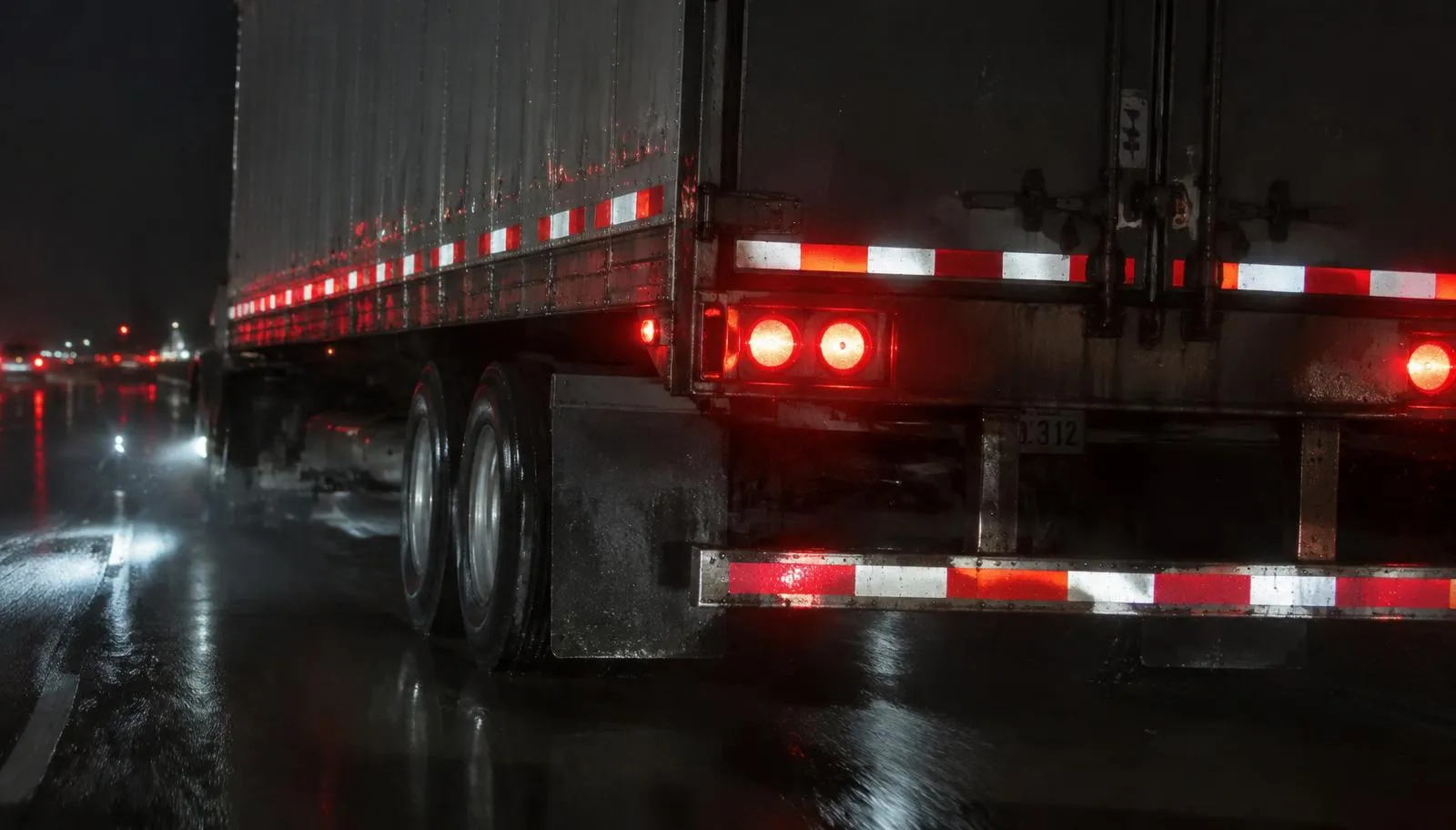
Lighting violations frustrate drivers because they feel minor. A single dead marker light doesn't stop a truck from hauling a load. But to an inspector, it's a safety issue, and on a dark stretch of I-10 at night, it can be the difference between another driver seeing your trailer or not.
The good news is that lights and reflective tape are some of the easiest compliance items to keep up with.
What trailers need
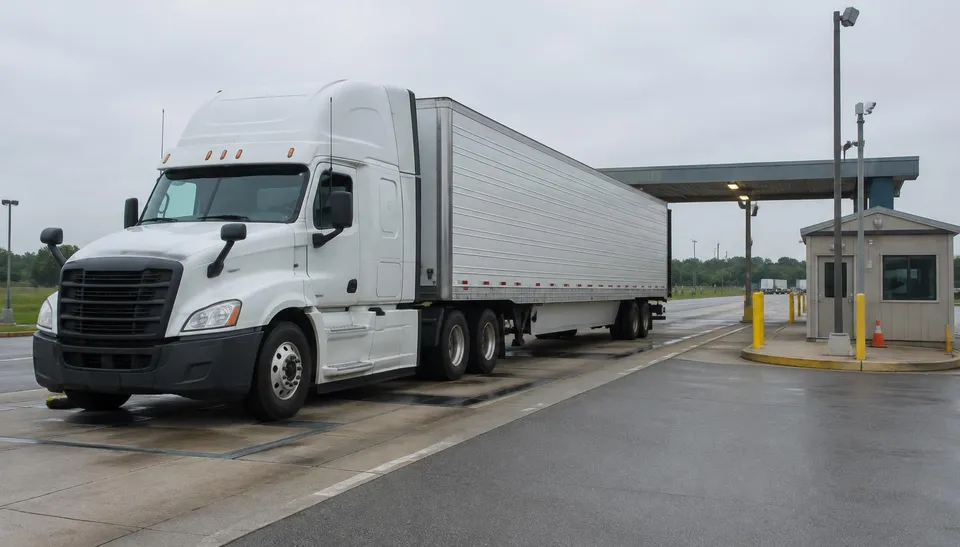
Commercial trailers need working tail lights, brake lights, turn signals, clearance and marker lights, identification lights where required, and license plate lights. The exact requirements depend on the trailer's size and type. Larger trailers also need retroreflective sheeting, the red and white tape you see along the sides and rear, so the trailer is visible in headlights even when its own lights aren't the brightest thing on the road.
Why reflective tape matters
Reflective tape, often called conspicuity tape, is required on many trailers for one reason: visibility. Side-impact crashes with trailers at night are a real danger, and the tape helps other drivers see a trailer crossing or parked on the shoulder. Inspectors look for tape that's missing, peeling, faded or covered with dirt. Damaged tape after a scrape or a repair is a common reason trailers get written up. Replacement tape should be the approved type, usually marked for DOT use.
Why trailer lights fail
Bulbs burning out is the obvious cause, but it's often not the real problem. The most common culprits are:
- Corroded plugs and sockets, especially in humid weather.
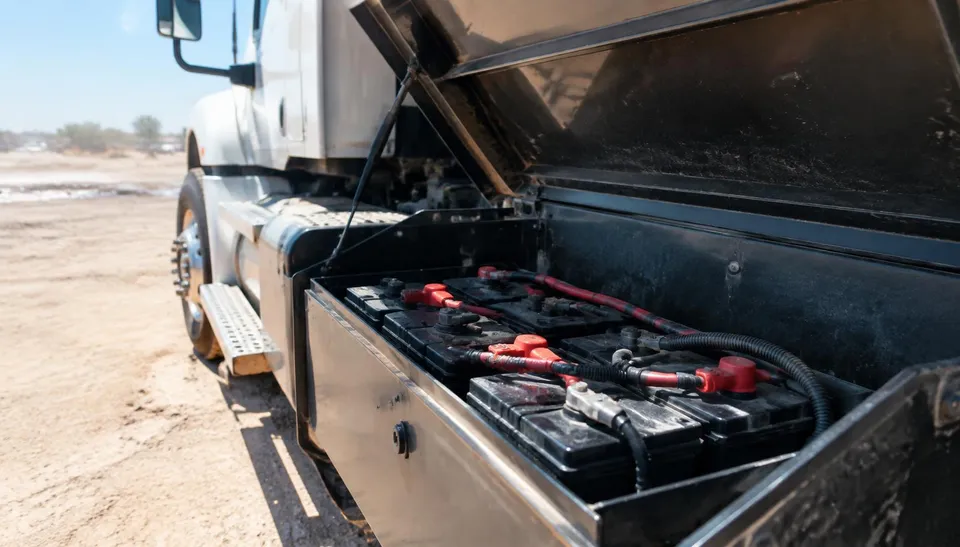
- Broken or pinched wires under the trailer.
- Poor ground connections, which cause dim or flickering lights.
- Water getting into lenses and housings.
- Damage from road debris, backing into docks or loading equipment.
Salt air near the coast and constant humidity in Southwest Louisiana speed up corrosion, so connections here need extra attention.
LED upgrades
Many fleets switch to LED lights because they last longer, draw less power and handle vibration better. LEDs are a good upgrade, but they still depend on good wiring and grounds. A new LED on a corroded connection will flicker just like an old bulb.
Quick checks before every trip
- Turn on running lights, four-ways and brake lights and walk around the whole rig.
- Look for cracked lenses and water inside housings.
- Check the trailer plug and cord for damage or corrosion.
- Look for missing, peeling or dirty reflective tape and clean it when you wash the trailer.
- Fix problems right away instead of waiting for them to stack up.
When lights work one day and not the next
Intermittent lights are almost always a wiring or ground problem. They're frustrating to chase because everything looks fine when you check it. Finding the cause means tracing the circuit and testing connections, not just swapping bulbs.
Get it fixed where the trailer sits
M3 Roadside fixes lights, wiring and reflective tape at your yard or lot, and lighting is part of every DOT compliance check. We also handle general trailer repair across Vinton, Sulphur, Lake Charles and the I-10 corridor.
Need a hand? Send a request or call (409) 233-8574.